
Hilton says it accepts bookings from AI agents, Meta's Muse among them. When Skift tested it last week, Muse couldn't get a room rate out of Hilton, Marriott or Hyatt, and a rival agent could. Letting agents in is one decision. Being readable once they arrive is a separate piece of work, and the holiday season is about seven weeks away.
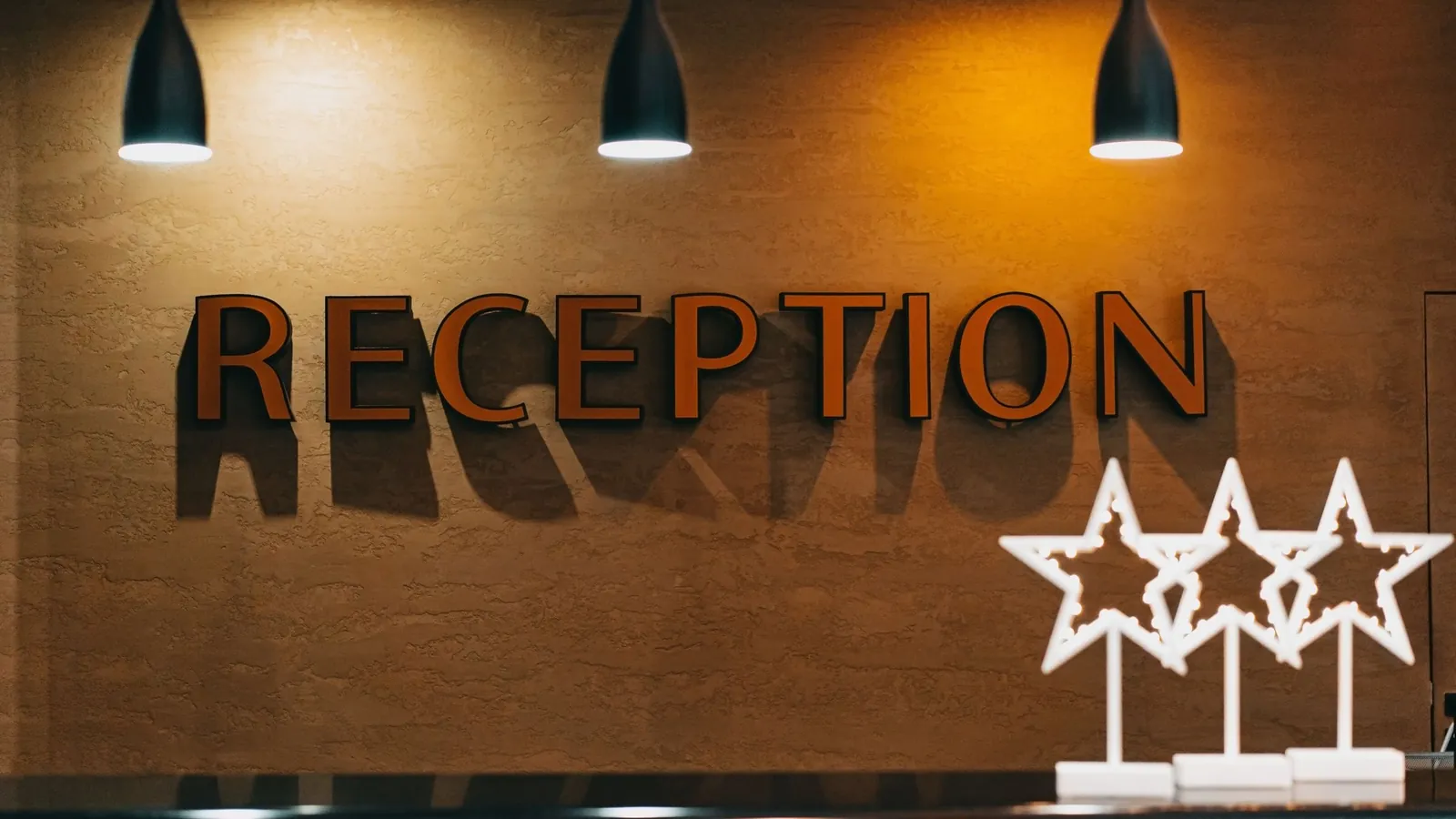
Skift asked Meta's shopping agent, Muse, to book a room at the Hilton New York Times Square. It got as far as choosing a room and a rate, then showed "Something went wrong." Logging in with Hilton Honors credentials didn't help. The same agent hit errors on Marriott and Hyatt sites too. Another agent, Instinct, searched all three chains and came back with member rates that matched what a person found by hand.
Hilton's position, in its own statement to Skift, is that it "is embracing agentic AI as a new way to connect with guests directly and is accepting bookings from various agents, including Muse." A spokesperson denied blocking Muse and said these tools are in their early days. Instinct's results suggest the chains aren't shutting agents out across the board. So a hotel group that wants agent bookings, and says so, still couldn't be read by one of the most visible agents on the market. If that can happen to Hilton, it can happen to a business with a much smaller tech team.
Saying yes to AI agents doesn't make your prices readable to them. That takes an interface built for an agent to call.
Getting in front of AI agents now has two parts: letting them in, and giving them something they can read.
Most agents today shop the way a person does, through web pages designed for human eyes. They load the page, find the room grid or the cart, and try to fill it in. That works until the page changes, a login screen appears, or the price only shows after a step the agent doesn't understand. The Register reported on October 1 that checkout systems still trip agents up on logins, card entry, and tax and shipping math. A page that works fine for a person can be a dead end for an agent.
The alternative is to give agents a structured way to ask. Shopify showed what that looks like on September 28, when it began rolling out checkout tools for browser-based agents through WebMCP. An agent can now inspect a Shopify checkout, change the address or delivery option, and place the order with the buyer's authorization, "without relying on screenshots or scraping web pages," TechCrunch reported. Shopify built the tools on the Universal Commerce Protocol, the open standard for agentic commerce, so the agent gets the price, the required disclosures and the handoff rules straight from the source.
Last week the platforms switched their merchants on. This week showed that being switched on and being readable can come apart.
Our last briefing covered Shopify turning on agent checkout by default for its stores while businesses on their own systems were left to switch themselves on. This week Shopify went further and made those stores readable to agents working inside a shopper's browser too. Amazon kept Muse blocked. And Hilton showed a third state that's easy to miss: a business that has said yes and still can't be read. That makes three positions a business can be in today: closed, open and readable, or open and stuck. The last one is the hardest to spot from the inside, because nothing on your end looks broken.
The analysts also cooled the story about fully autonomous shopping. Forrester's Sucharita Kodali and Emily Pfeiffer wrote on October 3 that "it's still unclear whether a critical mass of consumers actually want autonomous purchasing," and that the strongest use for agents may be research rather than buying, with high-intent moments like holiday promotions as the exception. That doesn't make the shift smaller for a business. Research is where an agent decides who's on the shortlist, and it can only shortlist what it can read.
Forecast year-over-year growth in AI-referred traffic to US retail sites, November 1 to December 31, 2026.
Source: Adobe Digital Insights, 2026 holiday shopping forecast, September 28, 2026. Based on more than 1 trillion visits to US retail sites; AI traffic is measured by shoppers clicking a link from an AI service. These are forecasts, not results.
The holiday traffic is coming either way. It will go to the businesses agents can read.
Adobe expects AI traffic to US retail sites to rise 130% this holiday season, with the biggest jump on Thanksgiving. That number counts shoppers clicking through from an AI service, so it's mostly people using agents to research and compare, which is exactly the stage where a business that can't be read drops off the list. Travel is further along. Bain reported on September 30 that the share of traffic AI sends to hotel and theme park sites quadrupled between July 2025 and July 2026, and doubled for cruise lines and online travel agents. It's still under 1% of total traffic for every category, but 49% of US consumers who have used AI for travel planning now rely on it most or all of the time.

Being unreadable doesn't show up as an error on your side. An agent that can't get your room rate or your shipping price doesn't email you about it. It moves to the next option, and your analytics show nothing at all. Hilton found out from a journalist. Most businesses won't get that courtesy.
The other thing to settle before the season is control. Federal Reserve Governor Christopher Waller, speaking at Sibos on September 29, called trust the biggest barrier to agents buying on someone's behalf and named three problems: authentication, liability and fraud. The question, he said, shifts "from proving that a buyer is an authorized payer to proving that an agent has the authority to pay on the buyer's behalf." He also said business-to-business buying may suit agents well, because approved-supplier lists and budget limits already give them rules to follow. Either way, a business wants to decide exactly what an agent can do in its systems before the traffic arrives.
Readable means an agent can ask your systems a question and get a straight answer.
BeaconSpec is the discovery layer for agentic commerce. You already run APIs behind your booking engine, catalog or ordering system: REST, OpenAPI or GraphQL. We turn them into one curated server an agent can call directly, and publish it as a UCP server card at your own /.well-known, on the same open protocol Shopify built its agent checkout on. The agent asks for availability or a price and gets the answer your system gives, with no page to parse and no layout change to break it.
You pick exactly which operations an agent may use, and anything you leave off doesn't exist as far as the agent is concerned. When a task needs the customer signed in, like seeing member rates or checking an order, we handle the standard login handshake so the agent acts inside that customer's own account, with no shared passwords. That gives you a direct answer to the authentication and liability questions the Fed is raising: the agent can do what you allowed, for the person who signed in, and nothing else.

We host it, or hand you a sealed container to run in your own environment. BeaconSpec isn't a platform or a marketplace, so nobody else decides whether your interface stays up. The specs under all of this keep changing, and keeping your surface correct as they do is our job.
A smaller, separate thing worth doing today
Before you publish anything for agents, it helps to decide which AI crawlers may reach your site at all. Answer three plain questions and our AI Visibility Checker writes a robots.txt that says exactly which AI crawlers you allow.
Check your AI visibility →No sign-up. Copy the result and paste it into your site.
Letting AI agents in is a policy. Being readable to them takes an interface.
Hilton says it welcomes agent bookings, and in Skift's test Meta's Muse still couldn't get a room rate. Shopify's stores, meanwhile, can now be read and checked out by browser agents through a standard built for it.
Adobe expects AI traffic to retail sites to rise 130% this holiday season. A business on its own systems can publish a curated interface agents read directly, and decide what they may do.
Worth watching over the next month: whether Google widens its in-chat Buy button later in October and whether it runs on UCP; whether Hilton and the other chains fix agent access or another hotel group runs into the same wall; and whether Meta opens Muse to businesses that aren't on Shopify.
BeaconSpec exists for exactly this shift: making your business discoverable and transactable by AI agents over UCP, on an interface you publish and control, kept correct as the standards underneath it keep changing.
See what we do • Try the free AI Visibility Checker • Read more articles
David Soden writes about automation, web strategy, and building durable technical systems for businesses. Photography via Pexels (Mikhail Nilov, cottonbro studio, Ketut Subiyanto). Figures cited are drawn from Skift's test of AI agents on Hilton, Marriott and Hyatt sites and Hilton's statement to Skift (October 2, 2026); Shopify's WebMCP checkout tools for browser-based agents, reported by TechCrunch (September 28, 2026); Amazon's block on Meta's Muse, reported by the Wall Street Journal and eMarketer (September 2026); The Register's report on agent checkout failures (October 1, 2026); Forrester's analysis by Sucharita Kodali and Emily Pfeiffer (October 3, 2026); Adobe Digital Insights' 2026 holiday shopping forecast (September 28, 2026); Bain & Company's brief on AI in travel, citing Similarweb data and Bain's Consumer Lab (September 30, 2026); and Federal Reserve Governor Christopher Waller's speech "Payments in the Age of AI Agents" at Sibos (September 29, 2026).